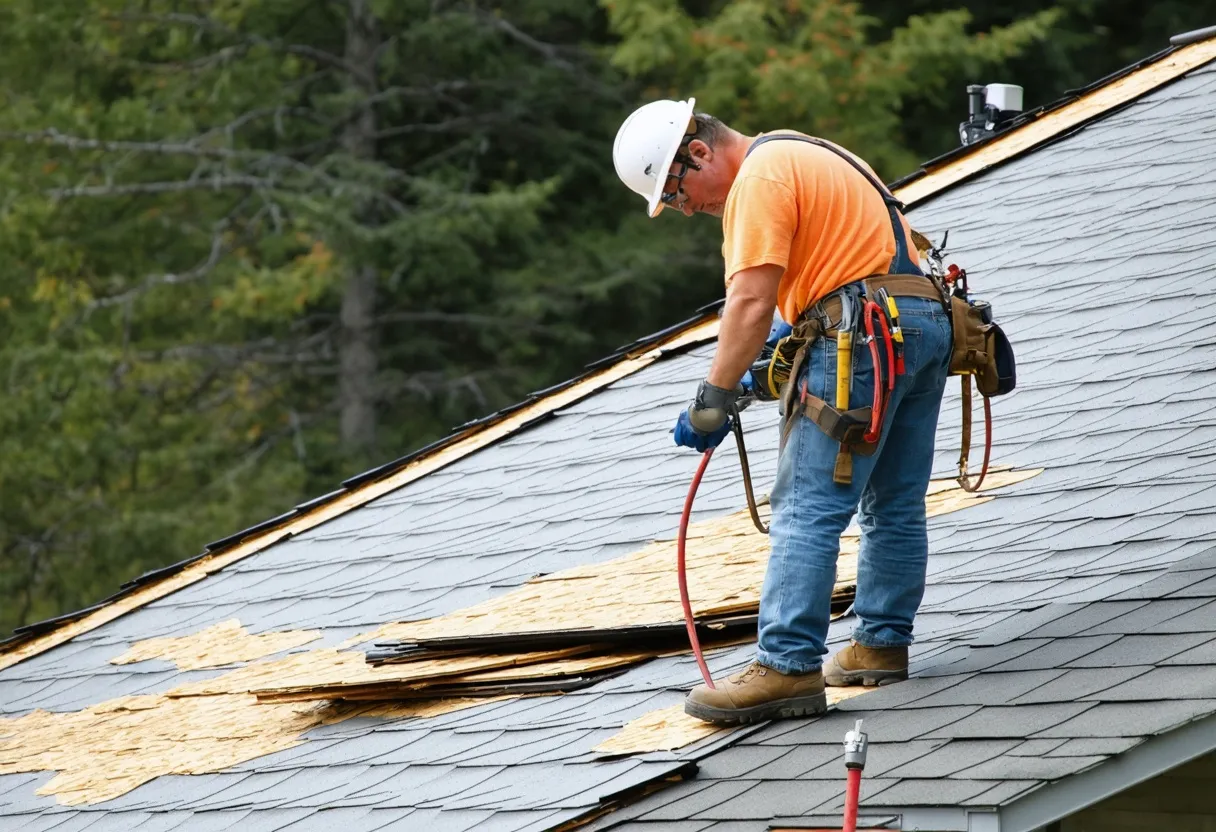
Storm damage roof repair in Fairbanks is not the same job as storm damage repair in Seattle or Denver. A wind event that peels back three tabs of shingle in a milder climate can, in Fairbanks, open a seam that lets meltwater from a spring warm snap track straight into your attic insulation and freeze there for the next six months. If you're searching for storm damage roof repair, wind damage roof repair, or snow damage roof repair in Fairbanks, AK, you're likely dealing with one of three things: a wind event that lifted or tore roofing material, a heavy snow load that stressed the deck or flashing, or an ice dam that backed water up under your shingles or membrane. All three require a repair approach built around Interior Alaska's climate, not a generic patch job.
We repair storm-damaged roofs across the Fairbanks service area with an engineering-first approach: every repair accounts for snow load, vapor drive, and the freeze-thaw cycles that define an Interior Alaska winter. If you need a roof looked at today, our emergency roof repair crew in Fairbanks can respond same-day for active leaks. If your immediate concern is ice buildup along the eaves, our dedicated ice dam prevention service for Fairbanks homes goes deeper into that specific failure mode. This page covers everything else: what causes storm damage here, what a proper repair includes, what it costs, and how to work with your insurance company to get it paid for.
Why Storm Damage Hits Fairbanks Roofs Differently
Fairbanks sits in a climate that punishes roofs in a specific, predictable way. Heavy snowfall accumulates over months, then drastic temperature shifts — a January thaw, a chinook-driven warm spell, or simply the sun angle changing in late February — melt the bottom layer of snow against a roof deck that's warmer than the outside air. That meltwater runs down until it hits the cold overhang past the heated wall line, refreezes, and builds an ice dam. The next melt cycle has nowhere to drain, so it backs up under the shingles or membrane and finds every fastener hole, lap seam, or nail pop on its way to your ceiling. This cycle — heavy snowfall, drastic temperature shifts, and the ice dams they produce — is the single biggest driver of roof damage we see in this market. (F4)
There's a second factor that makes Fairbanks unusual: a large share of the local housing stock predates the 1994 adoption of modern snow-load requirements. Homes and outbuildings built before that code update were commonly framed to handle far less than the roughly 40 psf ground snow load that current Interior Alaska construction accounts for. A roof deck and truss system built to an older, lighter standard doesn't just look older — it deflects more under a heavy snow year, opens fastener and flashing seams that a newer structure wouldn't, and is more prone to the kind of storm damage that shows up as a leak rather than a dramatic collapse. (F5) When we assess storm damage on an older Fairbanks property, checking the framing's actual load capacity against current snow accumulation is part of the job, not an upsell — it's the difference between patching a symptom and fixing the reason the symptom keeps coming back.
Add wind to that mix — gusts that come off open terrain around the Fairbanks area with little to slow them down — and you get a third failure mode: shingles, ridge caps, and flashing lifted or torn loose entirely, sometimes stripping a section of roof down to bare deck. Wind damage roof repair in Fairbanks almost always overlaps with snow and ice damage repair, because a roof with wind-lifted shingles has compromised seals that let meltwater in at the next thaw, even if there's no visible hole yet.
Signs You Have Storm Damage That Needs Repair
Not all storm damage is obvious from the ground. Some of the most expensive damage we find started as something a homeowner assumed was cosmetic. Watch for:
- Water stains on ceilings or upper walls, especially ones that appear after a thaw rather than during active rain — this is classic ice dam backup, not a simple leak.
- Missing, cracked, curled, or granule-bare shingles after a wind event, or shingles you can see lying in the yard or gutter line.
- Icicles or thick ice ridges along the eaves in winter, which almost always indicate an ice dam is forming or has already formed.
- Sagging rooflines or a noticeable dip in the roof plane after a heavy snow accumulation — this can indicate deck or truss stress and should be treated as urgent.
- Interior frost or moisture in the attic during cold snaps, which points to a ventilation problem interacting with roof damage rather than a simple leak.
- Damaged, dented, or separated flashing around chimneys, vent stacks, and skylights after wind or heavy snow shed.
- Granules collecting in gutters or at downspout outlets, a sign shingles have been abraded by wind-driven ice or hail.
If you're seeing any of these after a storm, snow event, or sudden thaw, the safest move is a professional inspection before the next freeze-thaw cycle makes the damage worse. A small seam leak found in October is a straightforward repair; the same leak ignored through a Fairbanks winter can mean saturated insulation, damaged drywall, and even structural rot by spring.
What Our Storm Damage Roof Repair Covers
Storm damage repair isn't one service — it's a category that covers several distinct problems, often on the same roof. Here's what's included when you call us out for storm, wind, or snow damage.
Shingle and Leak Repair
This is the most common call: wind-torn, cracked, or missing shingles that have let water reach the deck. We replace damaged shingles in kind where possible (matching existing material and color as closely as the market allows), re-secure lifted tabs, and — critically — check the underlayment and deck beneath the visible damage. A shingle repair that only replaces what's visible from the ground and ignores a soaked layer underneath isn't a repair, it's a delay. We also trace leaks back to their actual entry point, which in Fairbanks is frequently several feet upslope from where the stain shows up inside, because water travels along the deck or rafters before it drips.
Ice Dam Prevention and Ice Dam Damage Repair
Because ice dams are the leading cause of winter roof failure here, we treat them as both a repair issue and a prevention issue. Repair means removing damaged material, drying and repairing the deck if water intruded, and reinstalling with proper ice-and-water-shield underlayment at the eaves. Prevention means addressing the actual cause — usually a combination of attic heat loss and inadequate ventilation — so the dam doesn't reform the next winter. For a full breakdown of how we diagnose and stop ice dams before they start, see our dedicated ice dam prevention page for Fairbanks properties, which covers heat-loss mapping, eave protection, and ventilation corrections in more depth than we can here.
Ventilation Corrections
Poor attic ventilation is one of the most under-diagnosed contributors to storm and ice damage in this market. If warm, moist air from your living space collects in the attic instead of venting out, it warms the underside of the roof deck unevenly, accelerates snowmelt at the ridge, and feeds the ice dam cycle at the eaves. It also promotes condensation that can rot decking from the inside, independent of any storm at all. When we repair storm damage, we check soffit intake, ridge or gable exhaust, and baffle placement, because repairing shingles on top of a ventilation problem just buys you a year or two before the same damage returns.
Moss and Algae Growth
Moss and algae are less aggressive in Fairbanks' dry, cold climate than in coastal Alaska or the Pacific Northwest, but they still show up on north-facing slopes, shaded roof sections near tree cover, and areas where snow sits longest into spring. Where we find it, we remove growth without damaging the shingle surface, address the moisture retention that's feeding it (often a drainage or ventilation issue), and treat the area to slow regrowth. Left alone, moss holds moisture against the roofing material through freeze-thaw cycles and accelerates granule loss.
Roof Inspections
Every storm repair starts with a full inspection, not just a look at the obvious damage. We check the entire roof plane, flashing details, ventilation components, gutter and drainage function, and — on older homes — the framing itself. We also offer standalone inspections for homeowners who want a pre-winter or post-storm assessment without committing to repair work up front, and inspections after a wind or hail event for insurance documentation purposes even if damage isn't immediately visible from the ground.
Storm Damage Restoration Beyond the Roof Surface
Significant storm events sometimes cause damage that goes beyond a shingle or flashing repair — a partial deck failure under heavy snow load, a section of roof stripped by wind, or interior damage from water that got in before the leak was caught. In these cases, we handle full storm damage restoration: deck replacement where sheathing has rotted or delaminated, structural assessment on older framing, and coordination of the repair sequence so your home is weathertight again as fast as possible, with a permanent repair to follow once materials and conditions allow. We also document everything with photos and written scope at each stage, which matters enormously if you're filing an insurance claim (more on that below).
Roofing Types We Repair and Install
Storm damage doesn't discriminate by roofing material, and neither does our crew. We work on:
- Asphalt shingle roofing — the most common residential roofing type in Fairbanks, and the one we repair most often after wind and ice events.
- Metal roofing — standing seam and corrugated metal handle Interior Alaska snow loads well when properly installed, but storm damage still occurs at seams, fasteners, and flashing transitions, and repairs require matching the exact profile and finish.
- Tile roofing — less common here but present on some properties; individual tiles can crack under impact or heavy snow shed from an upper roof plane, and we source replacements to match existing tile where possible.
- Flat and low-slope roofing, including TPO and EPDM membrane systems — common on additions, garages, and commercial buildings, where ponding water and seam failure are the typical storm-related issues rather than shingle loss.
- Skylight installation and repair — skylights are a frequent leak point after storms because the flashing detail around them is more complex than a plain roof plane; we install new skylights and repair or reflash existing ones that have started leaking.
We also install and repair green roofing systems for homeowners and businesses interested in vegetative or high-reflectance roofing options, with the added engineering consideration that any green roof system in this climate needs to be designed around the same snow-load and drainage realities as a conventional roof — extra weight from soil, plantings, and retained moisture has to be accounted for in the structural assessment, not added on top of a roof that wasn't built for it.
Commercial Roofing and Storm Damage
Commercial buildings in the Fairbanks area — flat or low-slope roofs especially — face the same snow-load and ice-dam pressures as residential properties, plus faster consequences when a leak is ignored: inventory damage, business interruption, and liability exposure from ice shedding onto walkways or parking areas. We handle commercial storm damage repair on TPO, EPDM, and metal commercial roof systems, including emergency tarping to stop active leaks during business hours, scheduled repair work that minimizes disruption, and drainage corrections for flat roofs where ponding is accelerating membrane failure.
How the Repair Process Works
Storm damage repair moves through a consistent process, whether it's a same-day emergency call or a scheduled repair after an inspection.
- Initial contact and triage. We ask what you're seeing — active leak, visible exterior damage, ice buildup, or a post-storm precaution check — so we can prioritize active water intrusion ahead of cosmetic damage.
- Inspection and documentation. We assess the full roof, not just the reported damage area, and photograph everything. This documentation becomes the basis of your repair estimate and, if applicable, your insurance claim.
- Temporary stabilization if needed. If there's an active leak or exposed deck, we tarp or otherwise seal the area to stop further water intrusion before permanent repair materials are sourced or weather allows the work.
- Written scope and estimate. You get a clear breakdown of what's damaged, what needs to be repaired versus replaced, and what it will cost — before work begins.
- Repair execution. We complete the repair using materials matched to your existing roof where possible, correcting the underlying cause (ventilation, flashing detail, underlayment) alongside the visible damage, not just papering over it.
- Final walkthrough and documentation handoff. We review completed work with you and provide the documentation package you'll need for insurance reimbursement or your own records.
Same-Day and 24-Hour Emergency Service
Active leaks and wind-stripped roof sections don't wait for business hours, and in Fairbanks a delayed response during a cold snap can mean the difference between a contained leak and a frozen, expanded one. We provide same-day response for active storm damage and offer 24-hour emergency service for situations where water is actively entering the home or a structural concern can't wait until morning. If you're dealing with an active leak right now, go directly to our 24-hour emergency roof repair service for Fairbanks rather than waiting on a scheduled inspection — that page is set up specifically for urgent response and will get you a faster callback than a general inquiry.
Roof Insurance Claim Help in Fairbanks
Most storm damage repair in this market gets paid for, in whole or in part, through a homeowner's insurance claim — but only if the claim is documented and filed correctly. We help homeowners through this process in several concrete ways:
- Pre-claim documentation. We photograph and write up damage in the same format insurance adjusters expect, which reduces back-and-forth and disputed line items.
- Meeting the adjuster on-site. We can be present when your insurance adjuster inspects the roof, pointing out damage that's easy to miss from the ground or through a quick walk of the roof — hidden flashing damage, deck softening, or ice dam intrusion points that aren't visible without getting on the roof itself.
- Scope comparison. If the adjuster's initial scope of work looks incomplete compared to what we found in our own inspection, we'll point out the specific gaps in writing so you can request a supplement rather than accepting an underfunded repair.
- Repair estimates that match claim requirements. Our written estimates are formatted to work directly with the claims process, itemized by material and labor rather than a single lump sum.
We do not inflate damage or file claims on your behalf — the claim itself is between you and your insurer — but we make sure the documentation reflects the real, full scope of storm damage so you're not stuck paying out of pocket for repairs that should be covered.
What Affects the Cost of Storm Damage Roof Repair
Every roof and every storm event is different, so we don't quote a flat price without an inspection, but the cost of storm damage repair in Fairbanks is generally driven by:
- Extent of the damage. A localized shingle repair costs far less than a section of deck replacement after sustained water intrusion or wind stripping.
- Roofing material. Matching existing metal panel profiles, specific tile styles, or membrane types affects material sourcing and cost more than standard asphalt shingle matching does.
- Roof pitch and access. Steeper roofs and roofs with difficult access (tight lot lines, obstructions, height) take longer and require more safety setup.
- Underlying cause corrections. If the repair includes fixing a ventilation deficiency or adding ice-and-water shield at the eaves to prevent recurrence, that's additional scope beyond patching visible damage — but it's what prevents the same repair bill next year.
- Structural findings. On pre-1994 homes especially, if the inspection finds deck or framing stress beyond what a standard repair addresses, that changes the scope and cost, but it's found and disclosed before work starts, not discovered as a surprise mid-job.
- Season and urgency. Emergency stabilization work has a different cost structure than scheduled repair work planned around weather windows.
We provide free quotes for storm damage repair, based on an actual inspection rather than a phone estimate, because a roof photo from the ground genuinely can't tell you what's happening at the flashing or under the shingle line. That inspection is also where we tell you honestly if a repair is the right call versus a full roof replacement — we'd rather lose a bigger-ticket job by giving you an accurate assessment than sell a repair that won't hold.
Why Local Experience Matters for Storm Damage Repair
A roofing crew that primarily works in a milder climate will default to repair methods that work fine in that climate and fail here. Interior Alaska roofing has to account for snow-load engineering, vapor and heat-loss dynamics unique to long, cold winters, and — for a meaningful share of the local housing stock — structural framing that was built to an older, lighter snow-load standard than current code requires. (F5) We work from that engineering-first standard on every storm damage repair, which means checking not just what broke, but why it broke under Fairbanks conditions, and repairing it so it holds through the next heavy snow year and the next freeze-thaw cycle, not just through the next dry week.
We serve homeowners and businesses throughout the greater Fairbanks area, including North Pole, the Fort Wainwright area, and the outlying communities of Ester, Chena Ridge, and Fox. (F1, F2, F3) Roofs in these areas face the same core threat — heavy snow accumulation followed by drastic temperature swings that drive ice dam formation — but local conditions like tree cover, elevation, and exposure vary enough that a repair approach tuned to one property doesn't always transfer directly to another. That's part of why every job starts with an actual on-site inspection rather than a generic estimate.
Request Your Free Roof Quote
Tell us about your roof and we'll get back to you with honest, upfront pricing.
More roofing services
Get a Straight Answer About Your Roof
Reach out for a free, no-pressure quote built around how your roof actually holds up to Fairbanks winters.